
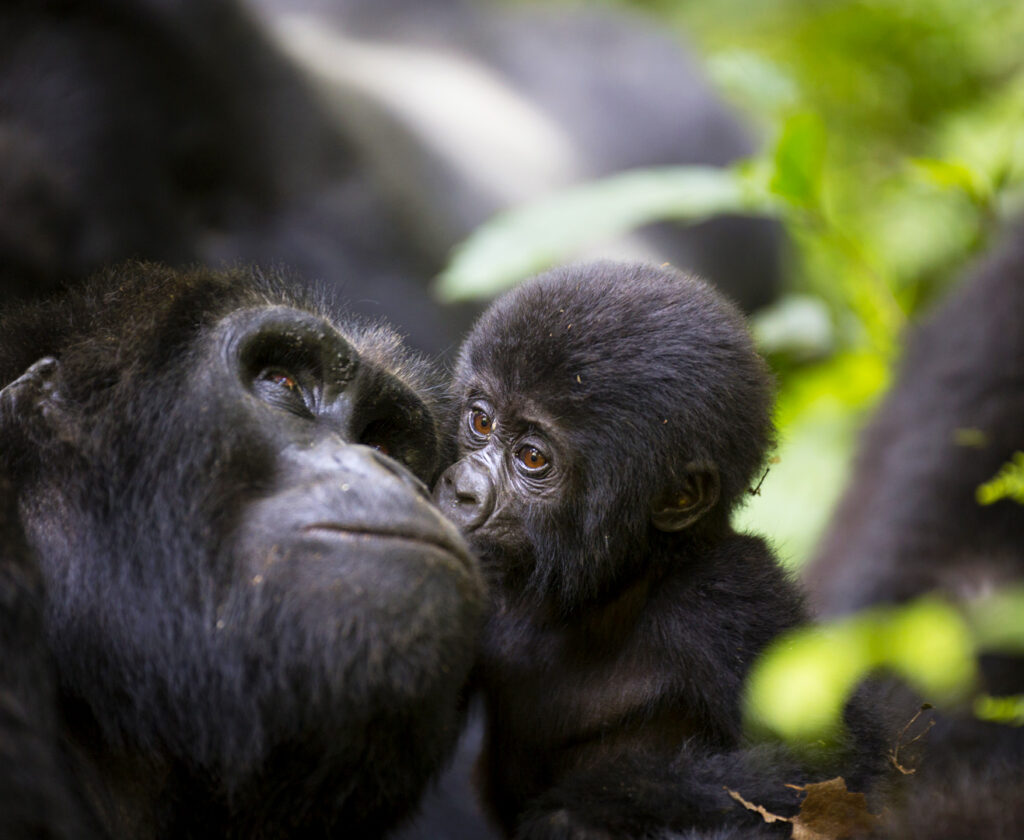
Chimpanzee trekking in Uganda : After gorilla trekking safari, chimpanzee trekking safari is the second most popular activity on Uganda safaris. Trekking entails walking through the tropical rainforest in search of chimpanzees and spending an hour with them in their natural habitat to gain insight into their behaviours.
Chimpanzees are our closest relatives, as they share more than 98% of our DNA with humans. They are primarily located in West, Central, and East Africa. Chimps inhabit communities that may consist of approximately 100 individuals. The ongoing threat to their habitat and human persecution has limited the number of Chimpanzee trekking in Kibale National Park to an average of around 18 individuals per community. In contrast to mountain gorillas, every chimpanzee community possesses its own distinct culture and practices, shaped by their environment and dietaryhabits.
These primates are exceptionally social, and their intelligence ranks just below that of humans within the broader primate family. Chimp communities are guided by a dominant male who upholds the hierarchies within the group, offering support to all members, particularly during attacks from neighboring communities. The authority of a leading male relies on the backing of the females within the group. This occurs as females do not exclusively mate with the alpha male.
Due to their intelligence, chimps are capable of communicating through intricate body language, as well as a variety of sounds including barks, hoots, and pants. Chimps express their emotions through facial expressions. Chimps are capable of using tools to extract insects, crack open nuts, or retrieve fruit from hard-to-access areas of a tree. Chimpanzees construct daily nests high in the trees. While their diet primarily consists of fruits, flowers, and insects, chimpanzees often collaborate to hunt antelopes and other small primates for meat. Chimps can reach weights of up to 70 kilograms and have a lifespan of up to 60 years when in captivity.
While leopards occasionally prey on chimps, primarily due to their ability to climb trees, the most significant threat comes from humans. In certain countries, humans pursue chimps for their meat, transmit diseases, invade forests, and devastate their natural habitats. Chimpanzees become casualties of snares and various traps intended for other wildlife, such as antelope. Numerous individuals have suffered the loss of their limbs to these traps, if they are fortunate enough to endure. In Uganda, the Uganda Wildlife Authority, along with international organizations such as the Jane Goodall Foundation, has significantly contributed to the protection of chimpanzees.
Where to do chimpanzee trekking in Uganda.
Kibale forest national park.
Known as the primate capital, Kibale Forest National Park is situated in western Uganda. The most popular chimpanzee safari destination in Uganda, Kibale National Park is home to 13 different primate species, including 1500 chimpanzees, red-tailed monkeys, grey-checked mangabeys, and black and white colobus monkeys. In Kibale National Park, chimpanzee trekking safari takes place in two sessions: one in the morning, which begins at about 8:00 am, and the other in the afternoon, which begins at about 12 pm.
Kibale forest national park additionally provides chimpanzee habituation experience where the wild chimpanzees are trained to get used to human presence for trekking.
Kalinzu forest.
Another place in Uganda where you can go chimpanzee trekking is Kalinzu Forest. Situated in the Bushenyi area of southwest Uganda, Kalinzu Forest is between Queen Elizabeth National Park and Maramagambo Forest. About 320 chimpanzees live in the jungle, of whom 50 are habituated and available for daily hiking.
Kyambura gorge.
Kyambura Gorge is situated in the western region of Uganda, in the eastern portion of Queen Elizabeth National Park. Over 29 chimpanzees call Kyambura Gorge home, and it’s open to visitors every day. Depending on your schedule, you can go chimpanzee trekking safari in the Kyambura Gorge in the morning or the afternoon.
Budongo forest.
The largest natural forest in East Africa, Budongo Forest, is situated in the national park of Murchison Falls. In addition to approximately 600 chimpanzees, Budongo Forest is home to several other primates, including olive baboons, black and white colobus monkeys, blue monkeys, red-tailed monkeys, grey-cheeked mangabeys, and more. It is the second most safari popular chimpanzee destination in Uganda, after Kibale National Park. With an experienced park guide, you can undertake chimpanzee trekking safari in Budongo Forest either in the morning or in the afternoon. In addition, the Budongo Forest provides a chimpanzee habituation experience that allows guests to spend four hours with the primates while they become acclimated. This experience is only offered during the rainy season.
Chimpanzee trekking experience.
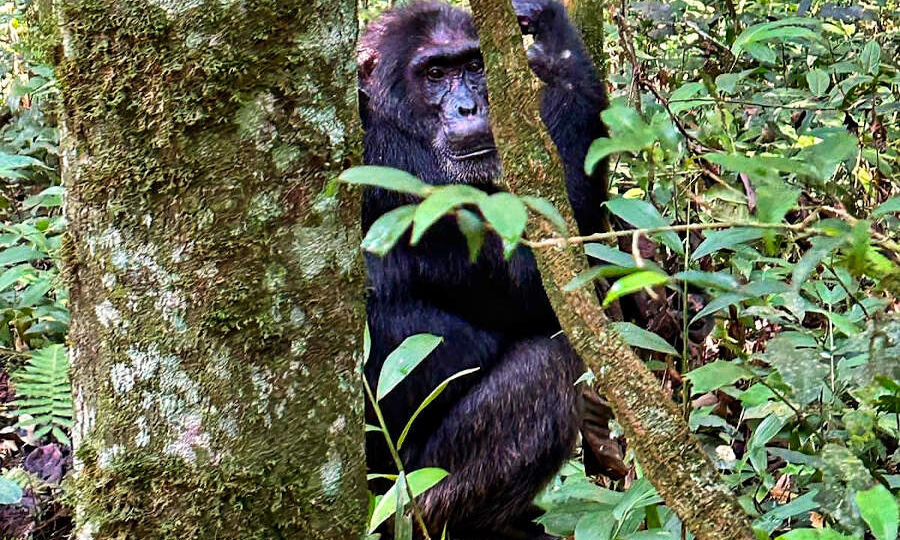
Chimpanzee trekking safari in Uganda tours begins in the morning with a briefing at the park headquarters where after you will be assigned a chimpanzee family to trek and a park guide who is knowledgeable about chimpanzees as well as conversant with trails to follow. Because chimpanzees prefer to roam around in search of food, chimpanzee trekking can take anywhere from 30 minutes to 4 hours, depending on the chimps’ location. During trekking you will be capable to view other primates like grey cheeked mangabey, black and white colobus monkeys, red tailed monkeys, blue monkeys, view different bird species, tree species among others. Once the chimpanzees are located you will be able to spend one hour with them in their natural habitat which gives you a chance to learn about their habits, lifestyle, behaviors, watch them feed, breastfeed, play, hunt, fight, take photos and record the beautiful moments to show people back home after the safari.
Best time to go for chimpanzee trekking in Uganda.
Although you may go chimpanzee trekking in Uganda year-round, the best times to go are from June to September and December to February, which is also known as the peak season or the dry season. In contrast to the wet or low season, when the trekking trails are muddy, slippery, and make trekking difficult, during the dry season, there is little to no rainfall in the tropical rainforests, resulting in thin vegetation that allows you to see chimpanzees clearly and passable chimpanzee trekking trails.
Cost of a chimpanzee trekking permit in Uganda
Any tourist over the age of 15 is granted a chimpanzee trekking permit, which is a permit or paper that enables them to visit any habituated chimpanzee family. A chimpanzee trekking permit in Kibale national park costs 250 USD per person for foreign non residents, 250 USD per person for foreign residents and 150,000 UGX per person for East African citizens.
A chimpanzee trekking permit in Budongo forest costs 130 USD per person for foreign non residents, 120 USD per person for foreign residents and 85 USD per person for East African citizens during the high/ peak season and 120 USD per person for foreign non residents, 110 USD per person for foreign residents and 80 USD per person for East African citizens during the low season.
For non-resident foreigners, chimpanzee trekking permits in Kyambura Gorge and Kalinzu Forest cost fifty dollars; for residents, the fee is fifty dollars; and for East African nationals, the cost is thirty thousand UGX per person.
You can check our website for reasonably priced chimpanzee trekking tours or get in touch with us for more information about chimpanzee trekking in Uganda.